
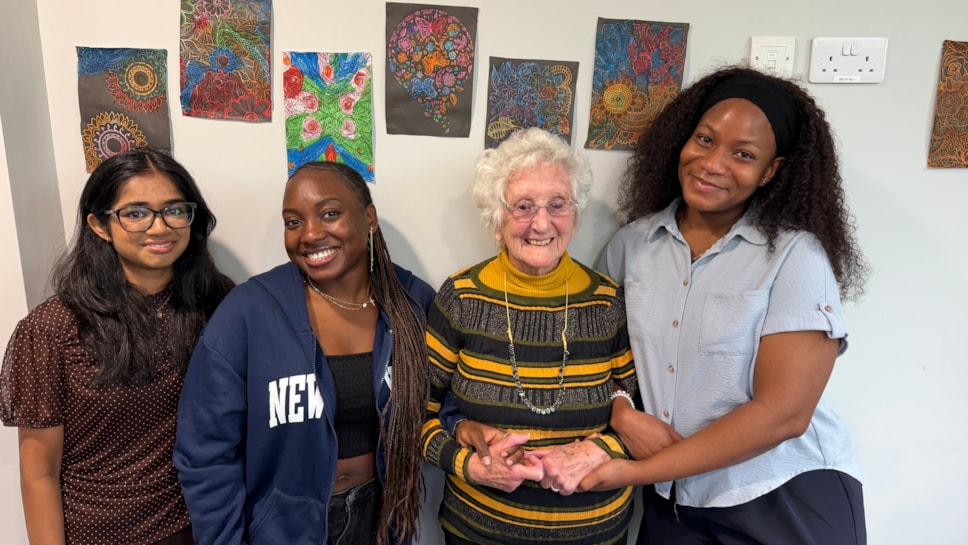
Care home residents help medical students learn the human side of healthcare
Some of Lancashire’s oldest residents are helping student doctors from the University of Lancashire to understand the human side of healthcare through a UK-first work placement programme that places students in local care homes.
Rather than concentrating on clinical skills, the 'Person Before the Patient' placement allows first year medical students to focus on communication, empathy and understanding the experiences of older people.
The University of Lancashire works with Lancashire County Council and some private residential care homes to create this teaching environment for medical students. Each year, approximately 280 students undertake placements across 11 care homes within the county. Students are allocated to groups of six to eight, with each care home hosting a different group of students each week over a four-week placement period.
The University of Lancashire was the first institution in the UK to use care homes in this way as a learning environment for medical students and as educational partners. It remains the only programme that places students on clinical placement in care homes during their first year of study. Students take part in a variety of hands-on activities, including singing, dancing, painting, crafting and sometimes just chatting to the residents.
Four of these care homes, Bowgreave Rise, Meadowfield House, Castleford and Broadfield House, are owned by the County Council with feedback from the staff and residents showing that the benefits were felt by all involved.
Audrey, a 102 year-old resident at Bowgreave Rise Home for Older People in Garstang, has spent time with several University of Lancashire students since the programme began two years ago.
She said:
"Having the medical students visit was a real highlight. They were kind, respectful and great company, and it was lovely to spend time talking with them and hearing about their ambitions for the future.
“We learned from each other, shared experiences and enjoyed a range of activities together. It was a rewarding experience for everyone involved."
Elisabeth Kalande, now a third-year medical student at the University of Lancashire, said:
"Spending time in a care home was a valuable reminder that every patient has a story to tell. Through simple conversations, activities and shared experiences, I had the chance to get to know residents beyond their health conditions and learn from their life experiences.
“The placement encouraged me to think differently about my own future and the importance of treating the whole person, not just their symptoms. It was also a wonderful opportunity for residents and students to learn from one another and build meaningful connections."
As well as developing empathy and communication skills, the pioneering work placement programme aims to introduce medical students from the very beginning of their training to older people receiving care and support, highlight the important role care homes play within the wider health and social care system and challenge misconceptions about care homes.
It is the brainchild of Dr Helen Rainford, a practising GP and Lead for Primary Care at the University, and has gained national recognition, including being a finalist for the Community Engagement University Sector Educate North Award.
Dr Rainford said:
"As a GP and medical educator, I want our students to experience the human side of medicine from the first year of training. By spending time in care homes, they learn about empathy, listening and building trust, while gaining insights they simply couldn't get from a textbook or lecture theatre. The experience helps them see people as individuals first, not just patients, and that's a lesson they will carry throughout their careers.”
Bowgreave Rise Home for Older People manager Jill Maun added:
"Working with the University has been a fantastic experience for our residents. The programme gives them the opportunity to share their experiences, build meaningful connections with medical students and contribute to the training of future healthcare professionals.
"Residents really enjoy taking part, and the conversations and activities bring enormous value to their day. We're proud to support a project that benefits both our community and the next generation of doctors."
The University of Lancashire provides funding to participating care homes to support the programme. These funds are paid directly to the amenity budgets of the care home, which are then used to benefit residents directly through initiatives such as creating raised garden beds, building chicken coops or funding other activities such as entertainment and improvements to the residents shared spaces.
Dr Rainford has written about the so-called ‘empathy drain’ in junior doctors and how care home placements can challenge this for The Conversation (What medical students learn from talking to care home residents)
Notes to editors
Additional quotes:
Shelia, an 82-year-old resident at Bowgreave Rise Home for Older People, said: “I’ve always loved dancing, especially rock and roll, so I’ve had a lot of fun teaching the students some moves. Dancing takes me back to my younger days and brings back good memories so to share this experience with young people who are interested in learning more about my life was lovely.”
Nidhi, a second-year medical student at the University of Lancashire, said:
"Going into the placement, I expected to spend time talking to residents, but the experience gave me so much more than that. I met incredible people, learned about Preston's history through those who have lived it, and developed a deeper understanding of the importance of person-centred care. The placement showed me that care homes are not simply places where people are looked after, but communities where residents are supported socially, emotionally and physically. It was an experience that will stay with me throughout my medical training and beyond."
Agneta, a third-year medical student at the University of Lancashire, said:
"The care home placement was an eye-opening experience that helped me develop the communication and listening skills that are essential for becoming a doctor. Spending time with residents and hearing about their lives taught me the importance of being fully present when speaking with patients and adapting to their needs. It also gave me a greater appreciation of the community that exists within care homes and the vital role they play in supporting people's wellbeing."