
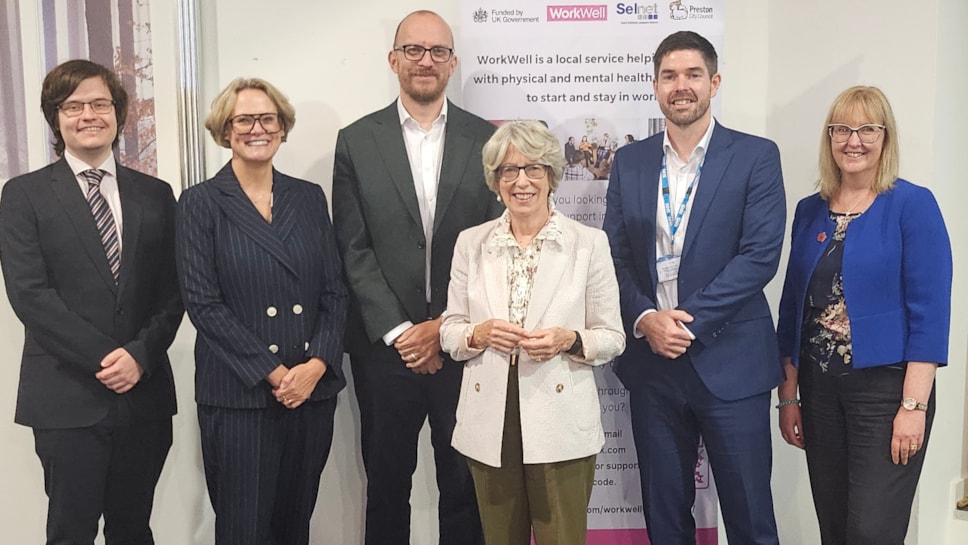
Lancashire partners continue their commitment to help more people into work
Partners from across Lancashire have come together to reflect on progress, strengthen collaboration, and agree priorities for the year ahead. Focusing on the Get Lancashire Working plan to help more people to overcome barriers to work.
The second Get Lancashire Working Big Conversation was held at the Garner Hotel in Samlesbury.
The event brought together a wide range of representatives from health, local government, employment and skills services, education and training providers, businesses and the voluntary, community, faith and social enterprise sector.

One year on from the launch of the Get Lancashire Working plan, the event was an opportunity to reflect on progress, hear from people's own experience and importantly renew their shared commitment to supporting people into healthy, sustainable work.
Get Lancashire Working is a collaboration of partners that supports the government initiatives to boost jobs and reduce economic inactivity and move towards an 80% employment rate for Lancashire.
Keynote speakers included Dame Patricia Hewitt, former Secretary of State for Health and Ben Harrison from the Work Foundation at Lancaster University.
Dr Michele Lawty-Jones, Director of the Lancashire Skills and Employment Hub, said:
“Over the past year, partners across Lancashire have worked hard to bring employment, skills and health support closer together. We're proud of what's been achieved so far. The Big Conversation has given us the opportunity to recognise our collective progress, listen to people’s experiences and focus on what we need to do next."
Alex Heritage, from the Integrated Care Board (ICB) said:
“No single organisation can tackle the barriers that keep people out of work. By combining our knowledge, services and commitment, we can make it easier for people to get the right support and move towards good, sustainable employment.”
The Get Lancashire Working Plan is a collaborative strategy, which aims to reduce economic inactivity and boost employment across Lancashire, targeting priority groups and integrating work, health, and skills services.
By strengthening collaboration between local and national partners, aligning services with the needs of Lancashire’s communities this shared commitment builds on the foundations already established by the Lancashire Skills Hub, the ICB, DWP and Lancashire’s dedicated network of providers and employers.
A key part of the Get Lancashire Working plan is Connect to Work, a voluntary programme which offers support particularly to those facing barriers such as health conditions, disabilities and wider barriers to employment. The programme also supports businesses by helping them build a stronger, more inclusive workforce and reducing recruitment costs.
More than 1,174 people have started receiving support from Connect to work programme up to June 2026.
Local businesses interested in partnering with Connect to Work or finding out more about the support available by visiting www.lancashireskillshub.co.uk/connect-to-work
Here are two examples of supported recipients:
Owen joined Connect to Work after many years of limited employment due to a history of epilepsy and a series of severe seizures in his twenties. He wanted a long‑term career, not just temporary jobs, and expressed a strong interest in sheet‑metal work. Connect to Work helped Owen to have a conversation with an employer about a suitable role, and he was offered a full-time position as an assembler. Owen is thriving in his new workplace and says he feels motivated and settled.
Scott's health meant he lost his long-term job, and he joined Connect to Work for support. His Employment Officer helped Scott secure a senior IT role that matched his experience perfectly. He said this is the best he has felt in a very long time, with his employment having a positive impact on his health overall.
Employers are encouraged to sign up to the Lancashire Skills Pledge, joining over 440 Lancashire businesses, to access a wider range of skills and employment programmes which will help to inspire, attract, recruit and upskill their workforces: Lancashire Skills Pledge - Lancashire Skills and Employment Hub.
Notes to editors
This Press Release has been issued on behalf of the Lancashire Combined County Authority.
About the event:
Hosting the event was Dr Michele Lawty-Jones, Director of the Lancashire Skills and Employment Hub, part of the Lancashire Combined County Authority; and presenting alongside her was Alex Heritage, Chief Strategy and Planning Officer from the ICB; and Tim Haworth, District Lead Lancashire, Cheshire & Warrington from the DWP.
The event also hosted a rich discussion panel chaired by Ben Harrison who was joined on the panel by Dame Patricia, Conor Jackson, NHS Alliance, and Lisa O’Loughlin, Principle, East Lancashire Learning Group.
Find out more about the project at: www.lancashireskillshub.co.uk
About the Lancashire Combined County Authority:
The Lancashire Combined County Authority (LCCA) has been established to devolve powers from central government to local decision-makers in Lancashire. As a Foundation Strategic Authority (FSA), it brings together local councils to take a more strategic approach to priorities such as transport, economic growth, skills and investment. The LCCA aims to improve public transport, boost economic prosperity, enhance employment and skills, and secure investment to support growth across Lancashire. It is made up of representatives from Lancashire County Council, Blackpool Council, Blackburn with Darwen Council and Lancashire's district councils, working together to deliver strategic priorities for Lancashire.
More information about the Lancashire Combined County Authority can be found at: lancashire-cca.gov.uk