
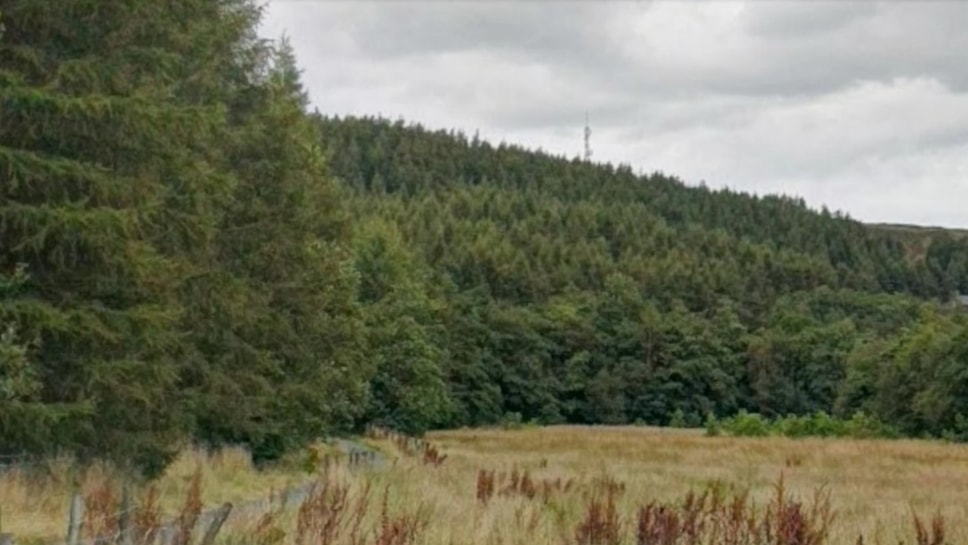
Work set to begin to remove diseased larch trees near Whitworth and Bacup
Work is set to begin soon to remove hundreds of larch trees that must be felled due to an incurable disease, near Whitworth and Bacup.
During the next tree planting season, which runs from October 2026 to March 2027, a diverse woodland will be planted to replace the larches. This includes a range of native species including birch, holly, mountain ash and oak.
The larches are due to be removed over the space of around 14 weeks. Work began to prepare access to the site from mid-February. The larches need to be removed as they were infected with Ramorum disease, an incurable type of water mould, which causes extensive damage to, and kills, affected trees. It does not affect humans or animals. Since 2009, more than 12,000 acres of woodlands with larch trees have had to be felled in the UK.
Lancashire County Council received a Statutory Plant Health Notice from the Forestry Commission in June 2025. This is a legal notice, requiring infected trees to be felled and is part of a national approach to stop the disease from spreading to other areas.
Since the Notice was received, the council's Treescapes team has successfully applied for a grant for £172,000 from the Forestry Commission to help pay for the felling work and the cost of the replanting scheme. The replanting scheme will provide longer-term benefits, because the mixed native broadleaf species which will replace them will provide a better habitat for wildlife and be more suited to the landscape and character of the area.
Councillor Joshua Roberts, cabinet member for Rural Affairs, Environment and Communities at Lancashire County Council, said:
"It is sad for us to lose the larches as they were beautiful and well-loved, but we need to take these down before new spores are able to start to spread again in the summer.
"It's vital that we help to prevent the spread of Ramorum disease to other parts of the country by removing them.
"This also paves the way for us to be able to re-forest the area. The joy of the re-planting scheme is that we can plant a diverse mix of trees, making the forest more resilient to disease, providing a more appropriate habitat for wildlife and sitting better in the landscape than the larches."
Find out more about the disease here: Phytophthora ramorum - Tree Disease - Woodland Trust